Skip to content
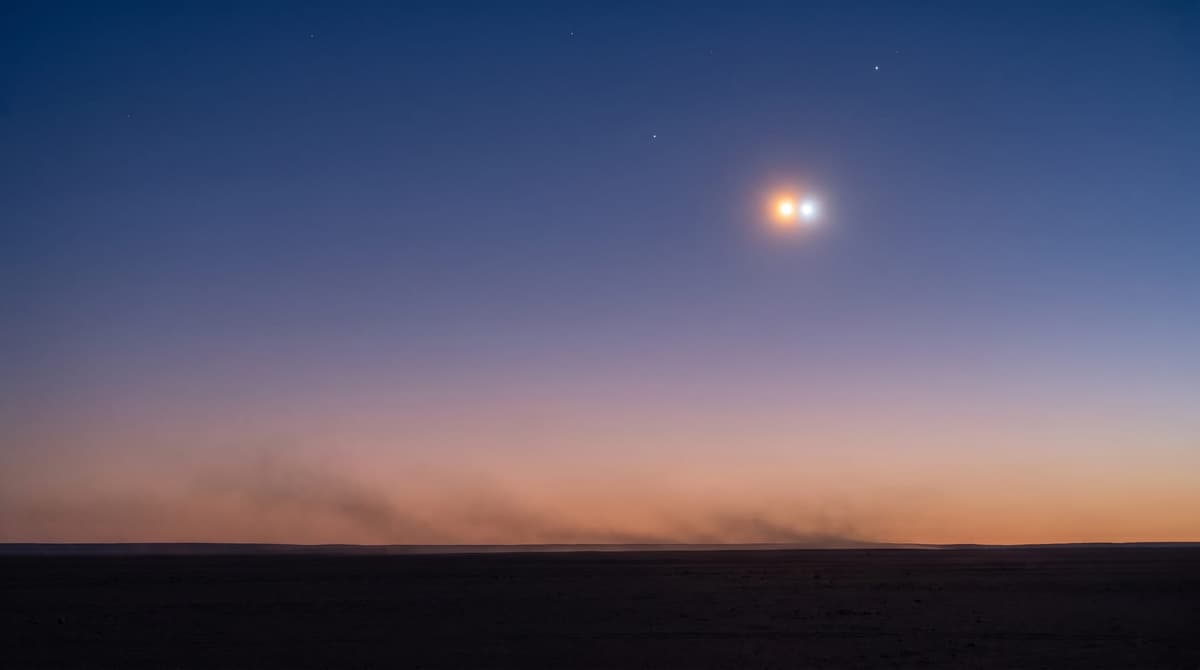
Conjunction Mercury–Neptune — symbolic illustration

Conjunction · 0°

Mercury conjunction Neptune

A neutral aspect: it amplifies both planets, and how it plays out depends on the signs they sit in and the rest of the chart.

Orb up to 8°NeutralNatal · synastry · transit
0°Mercury conjunction NeptuneOrb up to 8° · major aspect
Oksana MiatovaWritten by Oksana Miatova·12 min read

For entertainment and self-reflection only. Not medical, legal, financial or psychological advice. Consult a qualified professional for important decisions.

The short answer

Mercury conjunct Neptune merges the reasoning mind with the imaginative one. In the natal chart it gives image-rich thinking and a gift for language, alongside a soft spot when literal facts matter; in synastry it creates wordless understanding shadowed by idealisation; in transit it opens a short window where the muse arrives but the small print blurs.

What a conjunction is

The geometry behind the reading

A conjunction is a separation of zero degrees between two planets, and in the hierarchy of aspects it comes first for sheer force — it does not help or hinder, it fuses. The classical orb runs wide, up to eight degrees, because the blending effect carries even at a distance, though when I read a chart I tend to tighten that to about three or four for forecasting work. A conjunction has no built-in mood the way a square or a trine does; the result is decided by the two planets involved, the sign they sit in, and what else in the chart reaches towards them. For Mercury and Neptune, the merge means the most rational function of the chart — speech, logic, the handling of information — shares a single zone with the most diffuse one — imagination, intuition, the dissolving of edges. You can find this aspect in a world-class storyteller and in someone who has built decades of their life on illusions. The geometry is identical; the content is what the rest of the chart decides.

Three ways to read it

The same aspect, three different stories

One aspect reads differently depending on where you find it: inside a single birth chart, between two people, or moving across the sky right now. Read each as a way to notice patterns, not as a forecast.

Mercury conjunct Neptune in the natal chart

If Mercury conjunct Neptune sits in your natal chart, you have probably heard the same handful of phrases about yourself since childhood. Head in the clouds. Bit of a dreamer. Not quite of this world. And running alongside them, something unexpected: how do you tell it so beautifully, where do you get dreams like that, how did you know that was exactly what I was thinking. Two opposite verdicts on the very same person, sitting quite happily side by side, and both of them true. This is one specific astrological configuration, one in which the reasoning mind and the image-led, intuitive one share a single zone of the chart and operate as a single function, never neatly splitting into 'strict logic' over here and 'artistic inspiration' over there.

Inside your own head it feels like an inability to think in a clean straight line. Most people think in steps: a question, an argument, a conclusion. For you that process is folded differently. The question arrives already wrapped in a whole cloud of associations, pictures, scraps of other people's sentences, half-remembered things, and the conclusion forms not in sequence but all at once, as a finished sensation. Given a safe setting and time to think, that kind of mind produces unusual answers that the step-by-step route would never have reached. Pushed for a quick formal response, the trouble starts: the answer is there, but it cannot be said briefly in words.

There is a second layer to all this, less visible from outside. The conjunction turns the handling of facts into a genre of its own, one that needs its own discipline. A date you read yesterday can quietly shift by a few days overnight. A quote you heard from an acquaintance is, a week on, retold in your own edited version, and you are sincerely sure the other person said it that way. This is not bad faith and it is not ordinary forgetfulness; it is the particular way information gets processed. Mercury takes in the data, Neptune at once begins to interpret and enrich it, and after a while it becomes impossible to peel the fact apart from its artistic finishing.

The tone of the aspect leans heavily on the sign the conjunction occupies. In the air signs — Gemini, Libra, Aquarius — you tend to get the poet-philosopher, someone who can talk about things cleverly and beautifully at once, while often mislaying their practical meaning somewhere along the way. In fire — Aries, Leo, Sagittarius — the charismatic visionary, able to infect an audience with a picture of the future they themselves see more vividly than anyone. In earth — Taurus, Virgo, Capricorn — the disciplined artist, capable of carrying a lovely idea through to a concrete, tangible result, which in this configuration is a rare and valuable thing. In water — Cancer, Scorpio, Pisces — the therapist, the mystic, the prose writer, the person for whom the boundary between worlds always stands a touch ajar.

Then there is the shadow side, the one people rarely name out loud: the ability to phrase your own illusions beautifully and to defend them persuasively. Self-deception is especially dangerous in this configuration because it comes backed by good language. You confidently tell yourself, and those around you, the thing you would rather count as true, and over time you start to believe it yourself. After a few years of that it becomes nearly impossible to check where the fact ends and the embellishment begins. I have worked with dozens of clients who carry this configuration, and experience points the same way every time: integration starts with one plain, dull, thoroughly effective habit. Write facts down the moment you receive them. A logged date, an exact quote, a screenshot of a document, a note about an agreement. Three or four tools that put the ground back under your feet and leave the artistic part of life every bit of its beauty, without dismantling the practical part.

It is worth being clear about what this aspect is not. It is not a measure of intelligence and it is not a flaw to be corrected out of existence; the same wiring that loses a date is the wiring that finds a metaphor nobody else would reach. The aim of working with it is never to flatten the imagination into a spreadsheet, only to build a small fence around the places where literal accuracy carries a cost. To see how Mercury conjunct Neptune sits within the rest of your chart, and where exactly its strongest and most troublesome contacts fall, the sign, the house and the links to other planets all have to be read together — and the whole picture is what to go on, never a single line lifted out of context.
When it flows

  • Image-led, associative thinking — seeing a thread where other people see scattered, unrelated facts
  • A natural gift for language: poetry, prose, scripts, metaphor-rich talks that land without effort
  • High intuition in conversation, a feel for subtext, the knack of reading between the lines
  • The ability to translate a complicated idea into pictures an unprepared listener simply gets

When it grates

  • Haziness with figures, dates and documents — anywhere literal precision is the whole point
  • A tendency to treat your own assumptions as if they were verified information
  • How easily you take on someone else's suggestion, especially when it is beautifully put
  • A fog around self-presentation: hard to say something clear and short about yourself

The shadow side, and what to do with it

The shadow side of this aspect is the slow drift of the border between what you know and what you feel. At first it reads as a rich imagination, then as strong intuition, and a few years on as a conviction that has no outside confirmation behind it. Self-deception is especially risky here because it comes dressed in good language: you tell yourself, and everyone else, a persuasive version of what you would rather were true. The way through sounds dull but works — write facts down the moment you receive them. A logged date, an exact quote, a screenshot of the document: three small tools that put the ground back under your feet and let the aspect work for the artistic side of life without wrecking the practical one.

Conjunction — symbolic still life

How close is close

The orb decides the volume

A conjunction is rarely exact. The smaller the gap between the two planets — the orb — the louder the aspect plays. Here is roughly how the three bands read.

Tight

0–2°

Reads as a defining feature

At 0–2° the conjunction is at full density, and Mercury and Neptune are all but inseparable. Every thought arrives already trailing an emotional or image-laden tail, and pure logic becomes nearly impossible. This band carries the brightest artistic gift and the highest vulnerability to self-deception. If the conjunction is supported by Saturn, or by a Mercury in an earth sign, you get the rare type who can give clear shape to subtle intuitions. Without that structuring support, it tends towards fine poetic perception against a steady background of muddle over facts.

Medium

2–5°

A steady background pattern

At 2–5° the conjunction is a real feature of the chart and shows up in most of life, but a gap survives between the two planets — enough to return to literal accuracy when it genuinely matters: an exam, a serious negotiation, the reading of a contract. The default setting, though, is image-led thinking and intuitive perception. The professions where this band gives an edge are anything to do with language in the broad sense: journalism, copywriting, psychotherapy, teaching the humanities, directing, literary translation.

Loose

5–8°

A faint colouring, felt in crises

At 5–8° the conjunction works as a background tone — present, but not the thing that governs everyday thinking. You are capable of clear logic and precise speech, yet under fatigue, in emotional situations and beneath heavy transits the aspect's characteristic haze surfaces. This is the easiest band in which to learn to manage the configuration, because you have a built-in switch between the rational and the image mode, and over time you work out which mode to flick on for which task.

Conjunction with a partner — what does it mean for the two of you?

A full synastry reading — every aspect between your two charts

Mercury conjunction Neptune inside one chart is an inner mechanism. Between two charts it becomes the dynamic of a relationship. Enter both birth details and get a synastry reading — where the conjunctions sit, where the squares pull, where the oppositions draw you together — all calculated with the Swiss Ephemeris. Read it as a way to notice patterns, not a forecast.

Check your compatibilityfrom £1 · for entertainment

Compare with a neighbouring aspect

Same planets, a different distance

Mercury opposite Neptune tells a different story. If you're reading this to make sense of a specific chart, it's worth glancing at the neighbouring aspect too.

Mercury opposite Neptune
  • In the conjunction Mercury and Neptune share one point and act as a single function; in the opposition they sit at opposite poles and ask you to choose between logic and image
  • The conjunction folds intuition into ordinary thinking; the opposition turns it into a separate voice that now agrees with reason, now contradicts it
  • Self-deception under the conjunction comes from within — you quietly start to believe your own fantasies; under the opposition you are more often misled from outside, trusting someone else's words against your own signals
  • The conjunction gives a sense of wholeness, 'I think and feel at once'; the opposition gives a sense of split, 'I can see it's an illusion but I can't stop believing it'
  • Integrating the conjunction means the habit of writing facts down; integrating the opposition means the habit of checking an inner sense against verifiable reality

Lived examples

A few charts where you can see it

Public figures with a verified Rodden birth-data rating (AA/A/B). No invented data.

Frequently asked questions

What does Mercury conjunct Neptune mean in the natal chart?
It merges the rational mind with the image-led, intuitive one, so the two share a single zone of the chart and work as one function rather than splitting into 'cold logic' and 'artistic inspiration'. That gives rich associative thinking, a gift for language and a feel for context, alongside a soft spot in the realm of facts, documents and exact figures. The tone depends heavily on the sign and on links to other planets: in air it tends towards the poet-philosopher, in water towards the therapist or mystic, in earth towards the disciplined artist, in fire towards the charismatic visionary. Read it as a pattern to notice, not a verdict.
Is Mercury conjunct Neptune good or bad in synastry?
In itself the conjunction is neutral. In a couple it gives deep wordless understanding, a shared language of images and a real talent for inspiring each other. Running alongside that is a heightened risk of idealisation, of things left unsaid, and of chronic muddle over everyday detail. Whether it plays well or badly comes down to whether the partners are willing to back the beauty up with the dull practice of agreeing things out loud — and ideally in writing. As with everything here, this is a way to understand a relationship's patterns, not a prediction about it.
What orb should I use for Mercury conjunct Neptune?
Classically up to 8°. At 0–2° the aspect works at full density, with thought and intuition almost inseparable. At 2–5° the effect is clear, but a gap remains between the planets so you can return to logic when it really counts. From 5–8° the conjunction runs as background and shows up mainly under transits and in emotional situations. For event-focused forecasting a tighter orb of roughly 3–4° is usually preferred. Past about 10° the conjunction is considered to have dissolved.
Which celebrities have Mercury conjunct Neptune?
Among public figures with a confirmed birth time at Rodden AA, examples include Stephen King (Mercury and Neptune in Virgo), Jorge Luis Borges and David Lynch (in Capricorn). All three share one trait: the ability to work in the zone where image and text are indistinguishable, and where the power of the piece lies precisely in that blur. It is always worth checking a chart yourself on astro.com's AstroDatabank rather than taking a name on trust.
When is the next Mercury conjunct Neptune?
A Mercury–Neptune conjunction in the sky happens several times a year, because Mercury circles the Sun in about eighty-eight days and periodically catches up with the slow-moving Neptune. The exact dates of the next ones depend on Neptune's current degree, which shifts only gradually. If you mean a transit to your own natal points, the timing is particular to your chart and has to be calculated against your natal positions — general guidance is not enough on its own.
Is Mercury conjunct Neptune different for men and women?
There is no biological sex in a chart, but social expectation can amplify one side of the aspect. In a woman's chart it is often read as 'fine intuition, a poetic way with words', which tends to match what the surroundings expect. In a man's chart the same aspect can meet resistance in areas where literal precision is demanded, especially in technical and financial roles. The difference sits not in the chart but in the feedback from the environment a person has grown used to. None of this is destiny; it's a lens for noticing.
Is Mercury conjunct Neptune linked to a tendency towards addiction?
There is no astrological formula that says 'this conjunction equals addiction'. What the configuration does is raise sensitivity to substances and states that dissolve boundaries: alcohol, psychoactive substances, endless scrolling, binge-watching, foggy relationships with no clarity in them. If the chart also carries tense aspects to Mercury or Neptune from Saturn or Pluto, the risk of a habit forming can be higher. The protective practice is conscious sobriety in the broad sense, not only the chemical one. This is framed for self-reflection, not as a medical claim — anything to do with health belongs with a qualified professional.
Does Mercury conjunct Neptune make someone prone to lying?
More to self-deception than to deliberate lying. A person with this aspect usually does not set out to mislead others — they genuinely blur what happened with what they wished had happened. From outside it can look like dishonesty and cause friction, especially with people who have a strong Saturn or earthy planets. The work here is to write facts down the moment you get them, and to separate guess from knowledge out loud with phrases like 'I think' or 'I'm not sure'. Read it as a habit to watch, not a character sentence.
Where does Mercury conjunct Neptune fit in a career?
It sits well anywhere people are paid for working with language in the broad sense: fiction, poetry, scriptwriting, translation, copywriting for a brand with a mission, psychotherapy, teaching the humanities, directing, documentary film. It sits badly in roles that demand literal precision in numbers and deadlines with no room for interpretation: bookkeeping, legal translation, audit. If you do have to work in those zones, a second person to check the detail makes a real difference. This is a way to think about strengths, not a forecast of success or income.
What changes when transiting Mercury conjuncts my natal Neptune?
It is a short window, usually a few days, of heightened intuition and lowered factual precision. It is good for creative work with words, meditative practice, working through dreams and therapy. It is poor for signing contracts, big financial decisions and conversations that need total honesty with yourself and the other person. A simple rule: sign nothing unread in those days, and put any important agreement in writing straight away. Treat it as a pattern to plan around, for entertainment and self-reflection rather than as a prediction.

Related pages

The other aspects between Mercury and Neptune

The same two planets at a different angle — each reads differently.

Oksana Miatova
Oksana Miatova

Astrologer, co-founder of WowAstro

Oksana Miatova is a practising astrologer and co-founder of WowAstro. Natal charts, synastry and forecasts grounded in the Western classical tradition — explained through real-life examples and plain language.

More about the author →

For entertainment and self-reflection only. Not medical, legal, financial or psychological advice. Consult a qualified professional for important decisions.